You walk into a room. It feels too hot. The light hurts your eyes. You leave early. This happens when builders skip the study phase. Good buildings start with facts, not guesses.
Research-driven design uses data to shape spaces. It looks at weather, user habits, and material life spans. You get a structure that works for you. It saves money over time. It keeps people comfortable.
Why does this matter to you? You spend most of your time indoors. The air you breathe and the light you see affect your health. Poor design costs you more in repairs and energy bills. Smart design prevents these issues before construction starts.
Climate Data Shapes Comfort
Consider climate data. A building in a hot zone needs different walls than one in a cold zone. Without local weather stats, you might install glass that traps heat. Your cooling costs rise. Your comfort drops.
Sun path analysis tells you where shadows fall throughout the year. Wind rose diagrams show you where breezes come from. You use this info to place windows and vents. You let nature do the work.
You want your building to last. Materials behave differently under stress. Research tells you which ones hold up. You avoid cracks and leaks. You avoid early replacements.
At Renaissance Africa, we start with Research & Feasibility Studies. We gather data before we draw lines. This step shapes our Architectural Consultancy and Planning & Design work. We check the ground. We check the sun. We check the wind.
Understanding User Behavior
User behavior matters too. People use spaces in ways designers do not expect. A corridor might become a meeting spot. A quiet room might become a storage area. Observing real use helps you plan better.
We watch how people move. We track where they gather. We note where traffic jams happen. This info guides our layout choices. You get a flow that makes sense.
You might think extra study costs more upfront. It does. But it saves money later. Fixing a design error after building costs ten times more than fixing it on paper.
The Cost Of Skipping Research
What happens if you skip this step? You get a building that looks good but fails in use. You get high bills. You get unhappy users. You get frequent repairs.
Think about daylight. Natural light boosts mood and work output. Too much glare causes headaches. Research helps you place windows correctly. You get light without the heat.
We apply this in our Interior Design projects. We choose finishes that reflect light well. We place desks where the sun helps, not hinders. You work better. You feel better.
Our Approach At Renaissance Africa
Contract Administration also benefits from data. When you know the specs, you enforce them. You ensure the builder uses the right materials. You avoid shortcuts.
Project Supervision becomes smoother. You know what to look for. You catch errors early. You keep the timeline on track.
Services We Offer
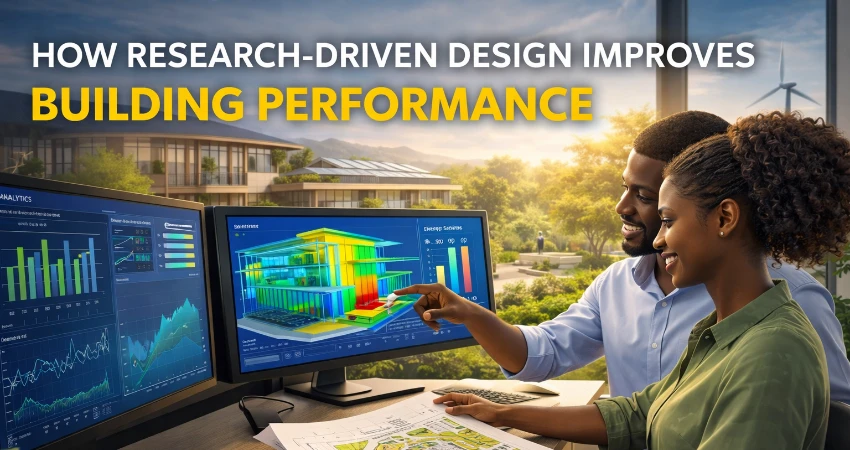
We believe in evidence-based choices. Our team uses tools to simulate performance. We test designs before you build. You see the outcome in advance. You make informed decisions.
This approach fits every project type. Homes need it. Offices need it. Schools need it. Hospitals need it. The stakes change, but the method stays the same.
Our full suite of services supports this method.
- Architectural Consultancy
- Research & Feasibility Studies
- Planning & Design
- Project Supervision
- Contract Administration
- Interior Design
Questions For Your Next Project
Real examples show the value. A school in Kenya used local climate data to design natural ventilation. They removed the need for air conditioning. They saved money every month.
Another office block tracked worker comfort. They adjusted the lighting and temperature based on feedback. Productivity went up. Sick days went down.
You deserve a building that serves you. You deserve a space that fits your life. Data gives you that power. It removes guesswork. It brings clarity.
You hold the key to better performance. Demand research. Ask for data. Question assumptions. Your building should work for you, not against you.
Good design solves problems. It does not create them. Start with facts. End with success.
What will you prioritize in your next project? Will you trust guesses or data? The choice shapes your future space.

Renaissance Africa
Your trusted architectural firm delivering innovative, sustainable, and cost-effective design solutions across residential, commercial, institutional, and hospitality projects in Kenya.