
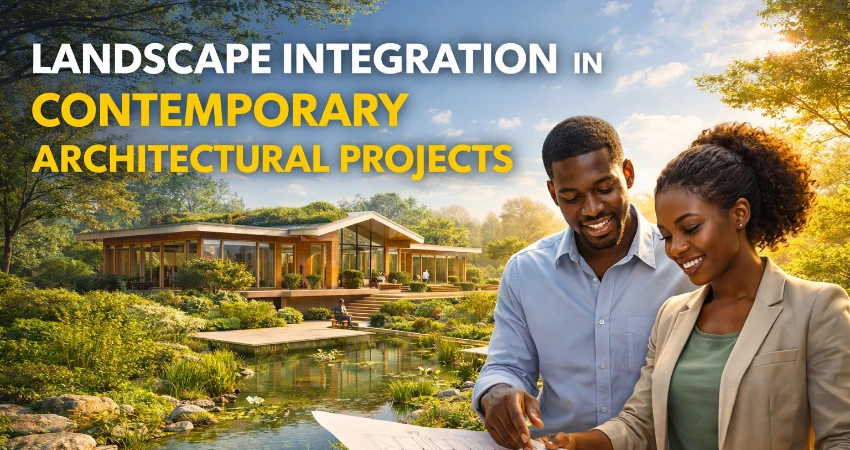
In contemporary architecture, buildings no longer exist as isolated objects. How a structure interacts with its surroundings—topography, vegetation, water features, and urban context—affects comfort, aesthetics, and functionality. Landscape integration ensures that your project responds to its environment, creating spaces that feel intentional rather than imposed.
You may have visited modern developments where outdoor areas seem disconnected from interiors. Walkways, gardens, and terraces feel like afterthoughts. Proper landscape integration prevents this. It allows your building and site to work together, enhancing usability, microclimate, and user experience.
Understanding the Site
Every project starts with its context. The land’s slope, soil type, drainage patterns, and existing vegetation influence design decisions. At Renaissance Africa, we combine Architectural Consultancy and Research & Feasibility Studies to understand these factors before drawing a single line. We ask: how can the building sit naturally on the site? Which trees or rock formations should remain? How will rainwater move across the property?
Ignoring these factors often leads to costly grading work, erosion, or poor water management. Proper site analysis ensures that you work with the land rather than against it.
Connecting Interior and Exterior Spaces
One key goal is seamless interaction between indoor and outdoor areas. Courtyards, patios, and terraces act as extensions of living or working spaces. Thoughtful window placement and visual corridors allow occupants to engage with greenery, improving mental well-being and natural lighting.
For example, in one of our residential projects, we oriented all main living spaces toward a central courtyard. The result was continuous sightlines to planted areas, creating a sense of openness even in a compact urban site. This integration reduces the psychological barrier between indoor and outdoor areas, making your building feel larger and more inviting.
Sustainable Water and Vegetation Management
Landscape integration affects environmental performance. Vegetation can reduce heat, improve air quality, and manage stormwater. Water features or swales control runoff and recharge groundwater. Selecting native and drought-tolerant plants lowers maintenance and water consumption.
- Rain gardens capture and filter stormwater naturally.
- Green roofs insulate buildings and reduce heat gain.
- Tree placement provides shade and directs breezes for passive cooling.
These strategies are especially relevant in tropical and subtropical regions, where managing rainfall and solar gain influences comfort and energy use.
Coordinating with Design and Construction
Integration requires collaboration between designers, engineers, and contractors. At Renaissance Africa, Planning & Design and Project Supervision ensure that landscape elements are incorporated early. Pathways, decks, and planting beds are specified alongside structural elements, preventing conflicts during construction.
Poor coordination can lead to last-minute changes. Imagine installing a patio only to realize it blocks an existing tree root system, or placing a deck where water naturally pools. Supervision allows for early detection of such issues, saving time and expense.
Enhancing Functionality and User Experience
A well-integrated landscape is functional, not just decorative. Consider access, circulation, and activity zones. Gardens, seating areas, and open spaces should support intended use while maintaining visual harmony.
In commercial projects, landscape integration can improve wayfinding and comfort. Shaded walkways and planted buffers guide movement while mitigating noise and dust. Residential developments benefit from private green pockets that enhance outdoor living without compromising security.
Long-Term Maintenance and Adaptability
Integration also considers maintenance. Landscapes should be designed for long-term care. Choosing hardy plant species, planning irrigation, and allowing access for pruning or repairs ensures your vision persists.
We advise clients to view landscape integration as part of the building lifecycle. Interior Design and Contract Administration teams can coordinate materials, furniture placement, and site operations so that indoor and outdoor spaces continue to complement each other over time.
Reflection for Your Project
Ask yourself: Does your current project respond to its environment, or does it dominate it? Do outdoor areas feel connected to interiors, or are they afterthoughts? How will rainfall, vegetation, and topography shape the long-term performance of your building?
Engaging with these questions early improves comfort, sustainability, and user satisfaction. When you integrate landscape thoughtfully, your project gains cohesion, resilience, and visual clarity.

Renaissance Africa
Your trusted architectural firm delivering innovative, sustainable, and cost-effective design solutions across residential, commercial, institutional, and hospitality projects in Kenya.