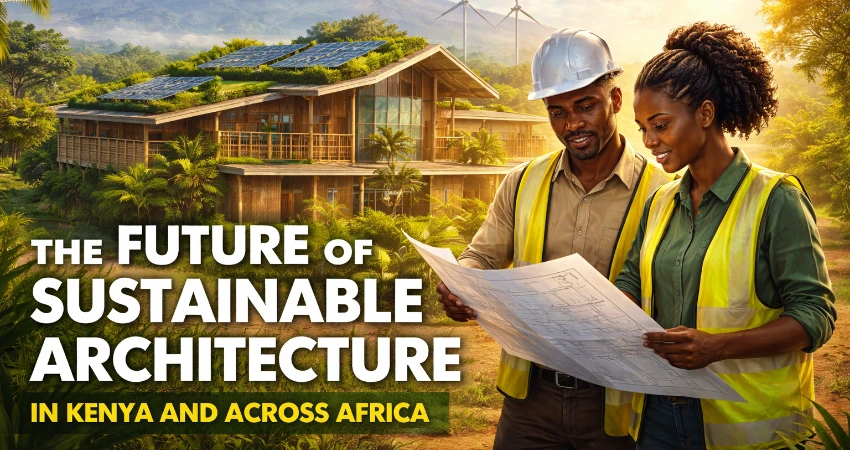
Sustainable architecture in Kenya and across Africa is no longer a niche conversation. It is becoming a practical response to rising energy costs, rapid urbanization, and climate pressure. When you design or invest in a building today, you shape how it will consume energy, manage water, and serve communities for decades. The future of architecture on the continent depends on how seriously you take those decisions now.
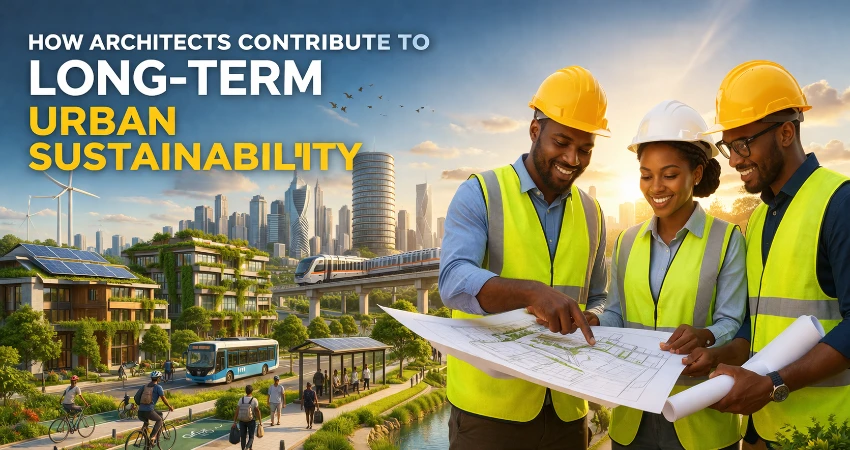
Africa’s urban population is growing faster than any other region. This growth creates demand for housing, offices, schools, and healthcare facilities. It also increases pressure on infrastructure, land, and energy systems. Sustainable architecture must respond to this scale.
Climate-Responsive Design as a Foundation
The future of sustainable architecture in Kenya will rely heavily on climate-responsive design. Many regions across East and West Africa experience high temperatures, strong sun, seasonal rains, and, in some areas, water scarcity. Designing without considering these conditions leads to overheating, high energy bills, and uncomfortable spaces.
You can reduce long-term operational costs by prioritizing passive strategies. Orientation, shading, cross-ventilation, and thermal mass matter more than expensive technology. The International Energy Agency reports that buildings account for around 30 percent of global final energy consumption. In cities like Nairobi, Lagos, and Accra, air conditioning demand continues to rise. If your project depends entirely on mechanical cooling, you increase grid pressure and operational expenses.
At Renaissance Africa, we address these issues early through Architectural Consultancy and Planning & Design. We study wind direction, sun paths, and rainfall patterns before finalizing building form. This approach reduces future energy demand without increasing construction costs significantly.
Ask yourself: Does your current project respond to local climate, or does it replicate a foreign model that ignores context?
Materials and Local Supply Chains
The future of sustainable architecture in Africa will also depend on material choices. Cement and steel dominate construction, yet both carry high carbon footprints. At the same time, many regions have access to local stone, compressed earth blocks, timber, and other materials with lower embodied carbon.
You can reduce environmental impact by selecting materials that meet structural needs while lowering transport distances. Local sourcing also strengthens regional economies. However, you must balance sustainability goals with durability and building codes. Research & Feasibility Studies help determine which materials align with cost, availability, and long-term performance.
In Kenya, interest in alternative building technologies such as stabilized soil blocks has grown. These materials offer thermal advantages and lower embodied energy compared to conventional concrete blocks. The question for you is not whether alternative materials exist, but whether you are willing to evaluate them against lifecycle cost and performance.
Water Management and Urban Resilience
Water management will define sustainable architecture across the continent. Flooding affects many African cities during heavy rains, while other regions face water shortages.
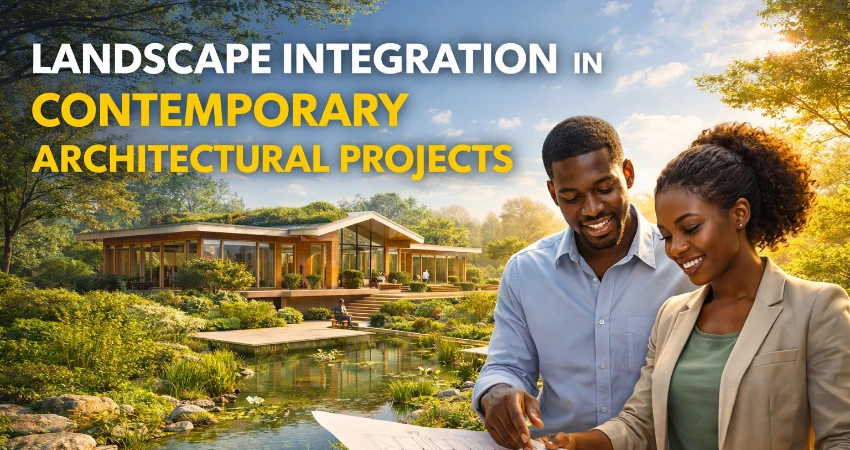
Your design can either worsen or reduce these risks. Permeable paving, rainwater harvesting, and green roofs reduce runoff and improve water availability. Proper site grading prevents erosion and property damage. These strategies require coordination between architects, engineers, and contractors.
Through Project Supervision and Contract Administration, Renaissance Africa ensures that water management strategies translate from drawings into built reality. A poorly installed drainage system can undermine even the best concept. Supervision protects both sustainability and investment value.
Affordable Housing and Social Equity
Sustainability in Africa cannot focus only on high-end developments. Rapid urban growth has led to housing shortages and informal settlements. If sustainable design remains limited to premium projects, it will not address the continent’s broader needs.
You can contribute by integrating cost-effective passive strategies into affordable housing. Proper orientation, shared courtyards, and natural ventilation reduce utility costs for residents. Lower operational costs make housing more affordable over time.
Consider your target market. Are you designing housing that residents can maintain? Or are you creating buildings that require expensive systems and a constant power supply? Long-term sustainability depends on realistic maintenance demands.
Technology and Data in Design Decisions
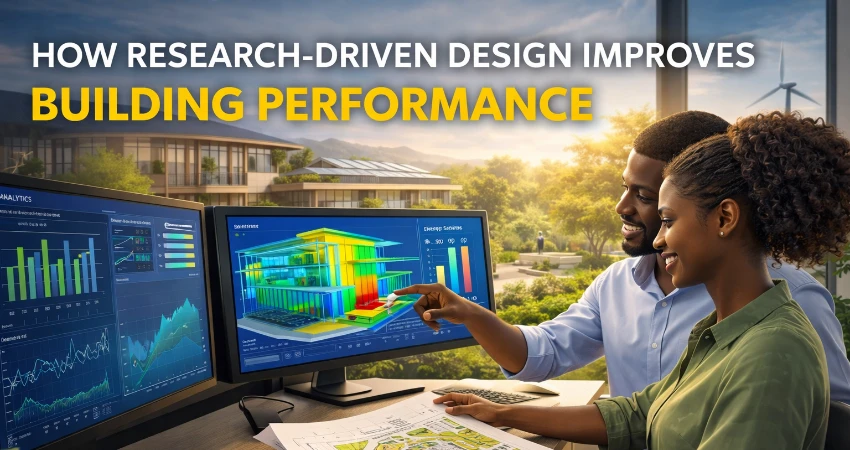
The future will also involve better data use. Energy modeling, daylight simulations, and lifecycle analysis tools help architects make informed decisions. These tools allow you to compare design options before construction begins.
Yet technology alone will not solve sustainability challenges. You must interpret data within the local context. Power outages, maintenance capacity, and user behavior influence real-world performance. Sustainable architecture in Africa will succeed when design integrates data with on-the-ground realities.
Policy, Standards, and Green Certification
Green building certifications are gaining attention in Kenya and South Africa. Programs such as EDGE, developed by the International Finance Corporation, provide measurable standards for resource savings. EDGE reports that certified buildings can reduce energy use by at least 20 percent compared to conventional buildings.
Certification can add credibility and market value. Still, you should treat it as a tool rather than a goal. True sustainability depends on long-term performance, not a plaque on the wall.
Ask yourself: are you pursuing certification for marketing, or are you genuinely committed to performance targets that improve urban resilience?
Integrating Sustainability Across Services
Sustainable architecture requires coordination across services. Architectural Consultancy shapes the concept. Planning & Design integrates passive strategies. Research & Feasibility Studies evaluate cost and risk. Project Supervision ensures execution aligns with sustainability goals. Interior Design can support daylight access, low-VOC materials, and adaptable layouts.
At Renaissance Africa, we approach sustainability as an integrated process rather than a single feature. This ensures that energy, water, materials, and user comfort remain aligned from concept to completion.
Looking Ahead
The future of sustainable architecture in Kenya and across Africa will not rely on imported trends. It will depend on climate awareness, local materials, water resilience, and social equity. Urban growth presents challenges, but it also offers opportunities. Each project you undertake becomes part of a larger urban system.
You shape how cities consume resources, manage climate risks, and support communities. The question is simple: will your next project add pressure to fragile systems, or will it strengthen them for the long term?

Renaissance Africa
Your trusted architectural firm delivering innovative, sustainable, and cost-effective design solutions across residential, commercial, institutional, and hospitality projects in Kenya.