
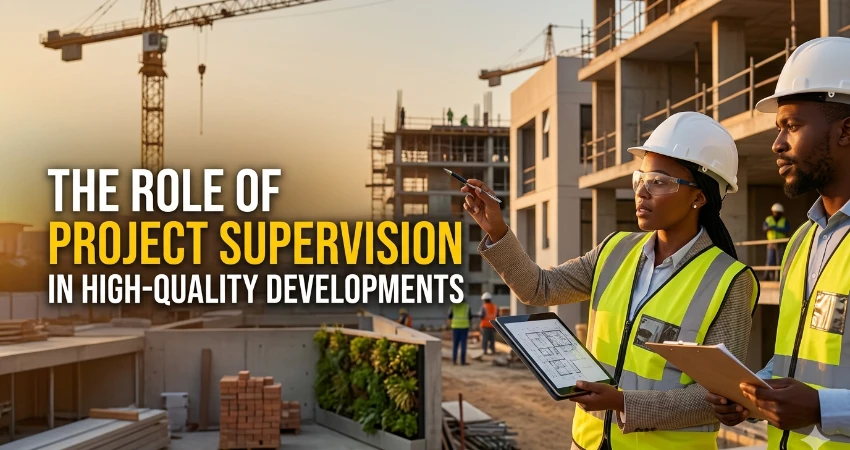
Every development project promises a vision. You imagine the finished building, the satisfied occupants, and the return on investment. Yet turning that vision into reality requires more than good designs and contractors. It requires continuous oversight. Project Supervision ensures that each phase of construction aligns with the original plans, specifications, and quality standards.
Without proper supervision, small mistakes accumulate. Materials may not meet specifications. Work may be rushed or misaligned. Delays become common. Costs rise unexpectedly. Studies from the Project Management Institute show that active supervision significantly increases project success rates and reduces cost overruns.
Ensuring Design Compliance
Project Supervision bridges the gap between planning and execution. Architects produce detailed drawings during Planning & Design, but the reality on site can diverge if left unchecked. Supervisors monitor whether contractors follow the design intent and material specifications. They verify that finishes, structural elements, and mechanical systems are installed correctly.
When Renaissance Africa provides Project Supervision, the team inspects each stage against approved drawings and quality benchmarks. They ensure that deviations are identified and corrected immediately, rather than allowing small errors to cascade into expensive corrections later.
Protecting Quality Through Continuous Oversight
High-quality developments require consistency. Supervision ensures that workmanship meets standards, materials are certified, and installation methods follow best practices. Daily or weekly site inspections help identify issues before they become structural or cosmetic defects.
For example, a concrete mix may meet design strength on paper, but improper curing can reduce durability. A supervisor confirms that curing practices are followed, preventing long-term damage and costly repairs. In residential developments, this attention to detail translates to fewer complaints from homeowners and higher resale values.
Managing Contractors and Subcontractors
Construction projects involve multiple trades: masons, plumbers, electricians, roofers, and more. Each operates under tight schedules, and their work often depends on others completing tasks first. Project Supervision coordinates these activities to prevent conflicts and rework.
Supervisors track progress, sequence work appropriately, and address delays before they escalate. If the plumber installs piping before the walls are correctly set, the supervisor intervenes. They also verify that each subcontractor meets contractual obligations. When contracts are monitored this way, claims and disputes reduce significantly.
Linking Supervision to Financial Control
Project Supervision also protects your investment. Certified progress reports tie payments to completed work, ensuring you do not pay for incomplete or substandard tasks. Supervisors track budget versus actual expenditure, including variations, so you remain informed of financial status at every stage.
A structured approach to financial oversight reduces unexpected overruns. When you combine Project Supervision with Contract Administration, you gain full visibility over cost, schedule, and quality simultaneously. This reduces surprises and improves accountability.
Reducing Risk and Delays
Construction projects inherently involve risk: material shortages, labor issues, weather interruptions, and design changes. Effective supervision identifies potential risks early. Supervisors track critical paths in the schedule, monitor resource availability, and recommend contingency measures.
Research shows that projects with dedicated supervision teams experience fewer delays and improved safety performance. Early detection of issues keeps the project on schedule and protects both budget and reputation.
Enhancing Communication
Miscommunication between the design team, contractors, and clients can cause significant setbacks. Supervision ensures that information flows accurately and promptly. Supervisors maintain records, issue site instructions, and schedule coordination meetings. Everyone understands their responsibilities and deadlines.
This structured communication prevents mistakes such as misaligned finishes or incorrect installations. When you receive regular reports, you can make informed decisions instead of reacting to crises.
Integrating Supervision with Design and Planning
Project Supervision works best when integrated from the earliest stages. During Architectural Consultancy and Research & Feasibility Studies, Renaissance Africa identifies key areas that may require additional oversight. Planning & Design decisions consider constructability and maintainability. By coordinating supervision with these phases, the project minimizes conflicts and improves quality outcomes.
Measuring Success
A well-supervised project has measurable benefits. Reduced defects, adherence to schedule, controlled costs, and satisfied occupants are all outcomes. You can review progress through site reports, photographic records, and inspection logs. These reports provide evidence of compliance and allow for continuous improvement in future projects.
Consider your current or past projects. How much of your final quality was a result of deliberate supervision versus reactive problem-solving? Would more proactive oversight have reduced errors or cost overruns?
Conclusion
Project Supervision is more than monitoring; it is a strategic function that connects design, execution, and quality. When executed well, it ensures that your vision translates into high-quality, durable, and financially sound developments. Renaissance Africa’s Project Supervision services combine technical knowledge, rigorous oversight, and reporting to give developers confidence that their projects meet expectations every step of the way.

Renaissance Africa
Your trusted architectural firm delivering innovative, sustainable, and cost-effective design solutions across residential, commercial, institutional, and hospitality projects in Kenya.